Critical Thinking: Credence and Veracity
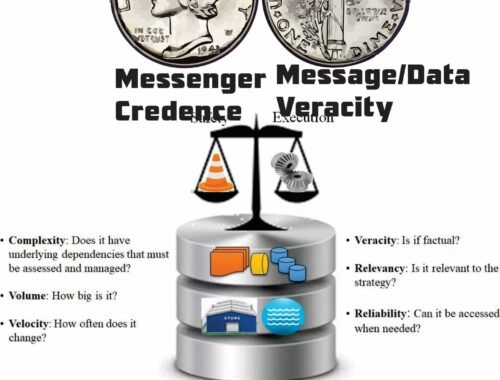
Critical Thinking and Policy Development and Analysis introduced the concepts of credence and veracity and said they were two sides of the same coin. The coin’s value depends on its credence and veracity. The figure above aligns credence with…
Critical Thinking: Correlation, Causation, and Control
During the fall, I like to step on acorn shells and crack them. There is a satisfying crunch sound that helps to break the monotony of several miles on the neighborhood trails. I understand it is a silly thing…
Critical Thinking: Bounded Rationality and Time
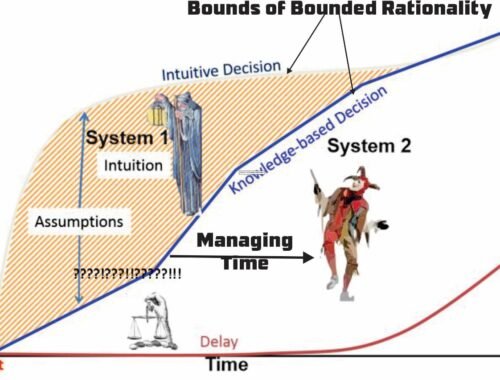
Time is one component of bounded rationality. The Bounded Rationality Model (see the introduction to this series) includes cognitive limitations and information/knowledge quality. Severe time constraints can drive a decision to System 1 approaches, with the decision based on…
Critical Thinking and Policy Development and Analysis
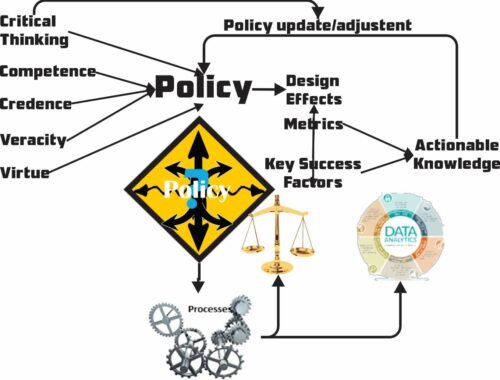
This blog builds upon Part 4: Policy Development. It is the opening part of a series on critical thinking and policy development and analysis. It provides the framework, as shown in the opening figure, for policy development and analysis. Following…
Critical Thinking and International Relations Theory
After the Colonial era, the fall of the Soviet Union, and the First Gulf War, many analysts proclaimed the world was getting safer and humanity was changing for the better. Francis Fukuyama argued this point. Samuel Huntington took a different…
Part 5—Cutting the Puppet Masters’ Strings
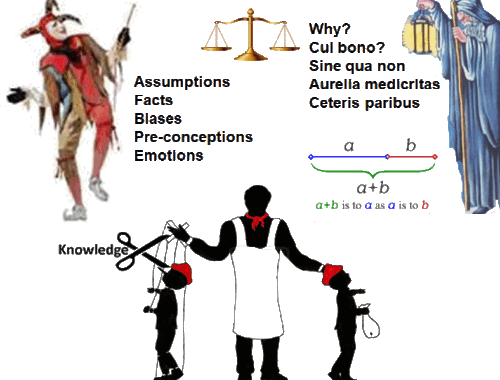
Abstract: Critical thinking and mindfulness are the two-fold path to citizen resiliency and independence from media induced memes. “A lie doesn’t become truth, wrong doesn’t become right and evil doesn’t become good just because it’s accepted by a majority.” —…