The Angel Oak: Nature, Nurture, Or Something Else: Implications for Free Will
Note: I try to meditate nearly every day. Often, I will get a thought during meditation that acts like a seed for follow-up contemplation. This is an example. I started out with a meditative seed on the Angel Oak and why it is so different from most oaks. Contemplation led me from nature versus nurture to free will versus determinism to will and responsibility. I guess I have a strange set of cognitive processes.
Part of my morning meditations are to visualize a sacred grove with an oak, a yew, and a willow tree set in a triangle. The other morning, I focused on the oak and I thought of the many oak trees I’ve seen in ever-increasing years. Of the hundreds, if not thousands, that I’ve seen, one stands out from the others. The Angel Oak is a massive, old oak near Charleston, SC.
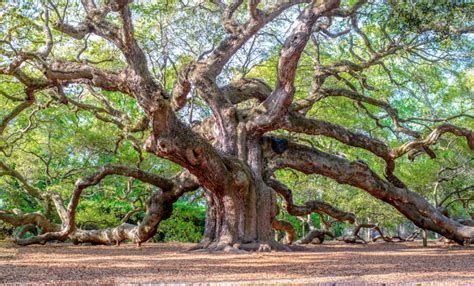
The accompanying picture shows the Angel Oak from one perspective. But to appreciate its age and size, one perspective does not do it justice. You have to walk around the Angel Oak and see the entire tree from a full 360 degree inspection. It is one of the most spectacular sights I’ve seen.
But during my meditation, I was struck with the question: What makes the Angel Oak so unique and different from other oaks?
Now, before we go into that question, just a bit of background on oaks in general. Many older Western societies considered oaks sacred. In some ways, this is perhaps because they are often the tallest trees in a forest and the most often struck by lightning.Likewise, mistletoe, which grows on oaks, is also considered sacred. James George Frazer’s The Golden Bough provides extensive research and discussion of this topic.
Now, back to the Angel Oak. Why is this one particular oak so huge and hoary? Were the genetics in the seed different from other oak seeds? Did the location, soil, solar exposure, and lack of resource competitors facilitate its growth? Did human intervention by shoring up and bracing its massive limbs allow it to continue to safely grow? Was it some combination of all three? Or was it just chance, a random variable that snuck in somehow?
I suspect people may not be too different from oaks. I don’t mean biology or physiology. I mean the whole nature versus nurture versus human manipulation versus change and random variables.
Now some, such as the biogenetic structuralism community, say it is all physiology and biology. Some even go to the extreme that a person has little or no free will and biology dictates his or her actions and character traits. If that is the case, then:
- Can we hold criminals accountable for their actions?
- Is there any chance for rehabilitation?
- Is Calvinism and other deterministic religious points of view correct?
Is there free will and the ability to master and control the impulses from biology and shape our own destiny?
To put some perspective, look at how acceptable conduct has changed over the last several decades. Crime and killings have skyrocketed, while civility has declined and the concept of ethical conduct has changed. If humans are slaves to biology, how can this happen?
This acceleration in crime and decline in civility correspond to a huge expansion in the federal government and programs that seem to take personal responsibility away from citizens. The Powershift series in my blog provides examples and inflection points in the accrual of central government power and control.
Will and responsibility are two complementary sides of the same coin. Without taking responsibility, there can be no true will. Without taking responsibility for the effects of exercising will, Will will backfire and erode. When the government, via OSHA or a myriad of other programs and government largesse takes responsibility from the citizens for their actions and behavior, there seem to be serious consequences. This is exacerbated by prosecutors and government officials that turn a blind eye to crime.


You May Also Like
Critical Thinking: Credence and Veracity
Thoughts on Ukraine, Part 2: Kleptocracy, Not Patriotism or Shared Nationality