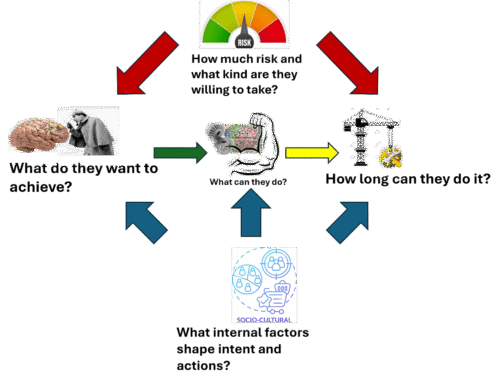

Threat Part 5: Capacity
With capacity, the fundamental question is: how long can the threat sustain capabilities? Do they have the capacity for just a single strike or do they have the capacity for multiple strikes and to sustain the capabilities over an extended period? If the threat is heavily attrited, will it be able to continue combat operations?
Capacity = ƒ(organizations, resources, sustainability, training base)
The first element in the capacity function statement is organizations. This is a multidimensional component:
Organizations(# organizations, sustainment capabilities, location)
- How many organizations does the threat have that can manifest a capability and what is their skill rating? Obviously, the more skilled an organization is, the threat it has, the more losses it can take and the longer they can manifest the capability.
- A sustainment organization manifests a sustainment capability. Capabilities can sustain other capabilities.
- Where are the organizations located? Geographic positioning can point to where the threat will manifest the capability and dispersion may improve sustainability—as long as the threat can concentrate them at the critical place and time. Does the threat have the transportation capabilities to concentrate at the critical place and time?
Resources govern how long the threat can sustain the effort and how quickly the threat can regenerate losses and resupply and refit depleted organizations.These can include:
Resource-ƒ(Fuel, Ammunition, Spare Parts, Replacement End Items, Safe capacity, Industrial Base)
- Fuel. Fuel and the ability to refuel shape what a capability can do. Think of the Germans and the Battle of the Bulge.
- Ammunition. Like fuel, the availability of ammunition can constrain operations. High-intensity combat will consume vast quantities of ammunition.
- Spare parts. Combat operations will destroy equipment that will need to be repaired.
- Replacement end items. Combat operations destroy equipment that needs to be replaced.
- Safe bandwidth. C2 depends on secure bandwidth. Often, bandwidth comes from satellites that may be vulnerable to cyber operations and anti-satellite operations.
- Industrial base. The industrial base produces equipment and repair parts. A robust industrial base allows the threat to quickly replenish losses.
Sustainability examines how fast and how much the threat can bring the resources to bear at the time and point of need. This means protected lines of communication (LOC) and supply over land, air, and sea.
The training base allows the threat to replace people and keep a flow of skilled personnel to the fight. The other dimension is how secure is the training base? Can it be lowered from cyber and direct attacks? Think of the deep operations Ukraine has executed against Russian sustainment operations.
If the threat cannot sustain capabilities, it could culminate early and be vulnerable to counterattacks. There is an adage that “Amateurs talk about tactics, but professionals study logistics.” (Gen. Robert H. Barrow, USMC (Commandant of the Marine Corps) noted in 1980). The best operations and tactics will fail if they cannot be readily supported. In some operations, logistics and sustainability may be the threat’s center of gravity and/or vulnerability. An effective strategy must embrace and protect sustainability operations if they last more than a few days.


You May Also Like

Creating the Monster: The American Bureaucracy
Reconstructing History, Part 4: Multiple Punctured Equilibriums